

Communicating Technical Expertise in an Age of AI Summaries


For years, technical professionals had a reliable playbook for building professional visibility online. You wrote a clean, structured explainer on a niche topic, used well-defined headings and keywords, and let search engines or publishing algorithms connect you with peers and decision makers. That playbook is broken.
My Epiphany
About a year ago, I came across an interesting Medium article by Burk, AI Isn’t Replacing Writers, It’s Replacing Readers, that hit home.
Every month or so, I go into Google and enter the URLs for some of my blog posts. Communication Tips on www.communicatingwithfinesse.com are 300 words and Communication Insights are on the order of 600 to 1,200 words. The more technical articles on www.jdsolomonsolutions.com are between 800 and 1,500 words.
All of my word counts are based on reading time, and more specifically, the reading time that many mid- to senior-level technical professionals and executives have.
Since I read the article, I started noticing that Google AI summaries are approximately 300 words. And you can read these before you need to click on a link. That basically means short subject-matter posts become irrelevant because 300 words is really just a duplication of a 200- to 300-word piece. Arguably, 600 words is almost just as irrelevant when it’s summarized to 300 words without clicking the link.
So what’s a technical professional who wants to share expertise and grow their knowledge and reputation to do? After all, old-school conferences that require 10,000-word papers are far less numerous than they once were. The main medium for communication is now the internet. Is AI flattening everything? And if so, how do you make your expertise stand out?
Rethinking the 600-Word Rule
For over a decade, 600 words was the gold-standard benchmark for professional blogging. It was long enough to satisfy search engine "thin content" filters and dense enough to carry a few target keywords. It was also short enough for a busy manager to read in three minutes over coffee.
AI Overviews have changed that math. Today, when I search for a standard definition, checklist, or technical explanation, the summary at the top of the page runs roughly 300 words. A summary that long can pull most of the factual takeaways from a 600-word article. That leaves the reader little reason to click through.
At the same time, platforms like Medium have moved away from simple follower feeds toward human writing and deeper reading engagement metrics. For mid- and senior-level technical professionals, this is as much a communication problem as a marketing one. If you write in the same generic, textbook style that an AI can summarize in ten seconds, your expertise becomes invisible.
How Technical Communicators Must Adapt
You do not need to write a 3,000-word technical article to stay relevant. Simply change what you put on the page and where you house your work.
Lead with Judgment, Not Definitions.
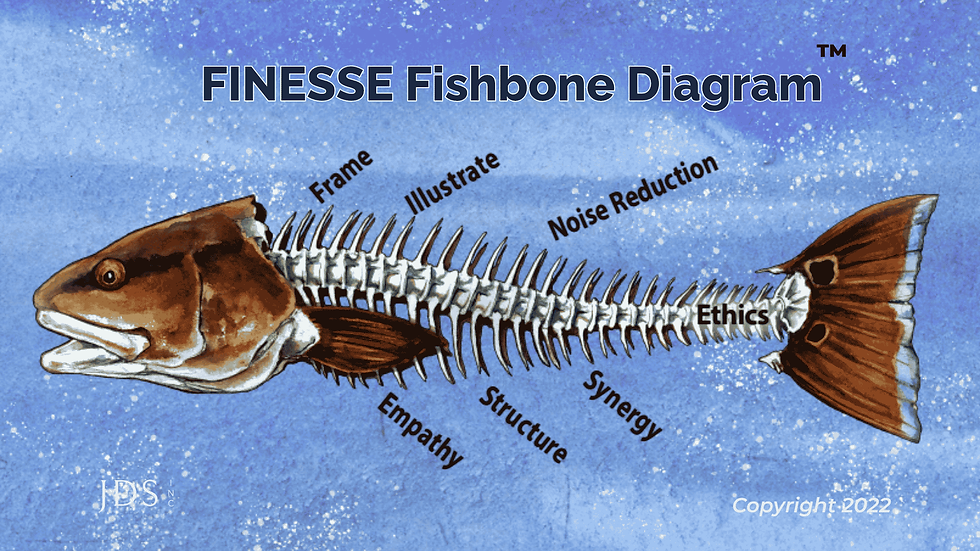
An AI assistant can summarize what a risk matrix or a root-cause analysis is. It cannot replicate what happened when your project team used one in the field, where an analytical model broke down, or how anything changed your assessment. In the FINESSE framework, your real-world examples are the part of your message an AI assistant cannot write for you.
Write for the Inbox, Not the Search Bar.
Relying on strangers to find your work through search engines is a losing game. If building your technical reputation is the goal, focus instead on building direct relationships through an owned website and targeted professional discussions. Those readers engage because they trust your perspective, not because an algorithm served them a link.
Own Your Reference Library
If you use your writing as a cross-reference tool for clients, teams, or peers, keep your master archive on a platform (your website) that you control. Third-party platforms change their visibility rules overnight. Your own home base remains searchable and linkable for future work.
Have a Plan
Having a plan is better than just rambling through it. I still use a word count (reading time) as a basis for what I write and present. Shorter pieces still have a place. They need to reach readers directly rather than through search. A framework for my written work is something like this:
300-600 words: Short answers, announcements, news, simple explanations.
800-1,200 words: Many blog posts, opinion pieces, how-to articles.
1,200-2,000 words: In-depth educational content and technical guidance.
2,000+ words: Comprehensive cornerstone content when the topic genuinely requires it.
Where This Meets FINESSE
Remember, the FINESSE communication approach is not about building technical reputation. It’s about communicating effectively with your boss’s boss (executive leadership). Promoting your work or yourself at the expense of the decision maker’s needs is exactly what FINESSE discourages.
Executive Communication Still Relies on Being Brief
Effective executive communication relies on being brief. That means fewer words in front of the boss’s boss. Some of the insights here also mean that the boss’s boss is less likely to read your expanded work outside of the meeting without a 300-word AI summary filter. As a technical professional, you need a strategy for that too. Put your conclusion and your judgment in the first paragraph. That way, any summary carries your point and not the textbook part.
The Takeaway on Building Technical Authority
Technical authority no longer comes from being the fastest person to summarize standard facts in 600 words. Machines do that for free now. Your edge, and the reason people will still read your work, is the hard-won knowledge and practical wisdom behind the numbers.
JD Solomon champions practical communication skills that help technical professionals convey complex ideas clearly and confidently. Learn more at www.jdsolomonsolutions.com and www.communicatingwithfinesse.com.


Comments